3-31
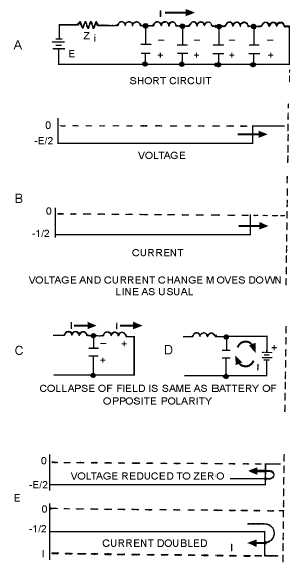
Figure 3-25.—Reflection from a short-circuited line.
Now there is no voltage to maintain the current through the next to the last inductor. Therefore, this
inductor discharges the next to the last capacitor.
As each capacitor is discharged to zero, the next inductor effectively becomes a new source of
voltage. The amplitude of each of these voltages is equal to E/2, but the polarity is the opposite of the
battery at the input end of the line. The collapsing field around each inductor, in turn, produces a voltage
that forces the current to continue flowing in the same direction, adding to the current from the source to
make it 2I. This action continues until all the capacitors are discharged (view E).
Reflected waves from a short-circuited transmission line are characterized as follows:
The reflected voltage has the opposite polarity but the same amplitude as the incident wave.
The reflected current has the same polarity and the same amplitude as the incident current.