2-41
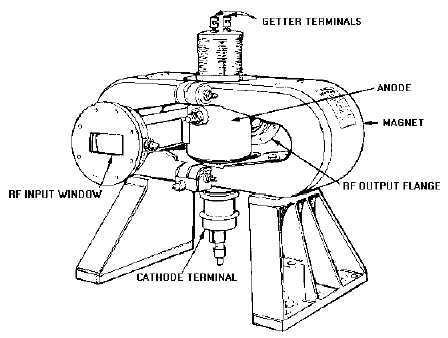
Figure 2-38.—Crossed-field amplifier (Amplitron).
Q-44. Why is the pi mode the most commonly used magnetron mode of operation?
Q-45. What two methods are used to couple energy into and out of magnetrons?
Q-46. Magnetron tuning by altering the surface-to-volume ratio of the hole portion of a hole-and-slot
cavity is what type of tuning?
Q-47. Capacitive tuning by inserting a ring into the cavity slot of a magnetron is accomplished by what
type of tuning mechanism?
SOLID-STATE MICROWAVE DEVICES
As with vacuum tubes, the special electronics effects encountered at microwave frequencies severely
limit the usefulness of transistors in most circuit applications. The need for small-sized microwave
devices has caused extensive research in this area. This research has produced solid-state devices with
higher and higher frequency ranges. The new solid-state microwave devices are predominantly active,
two-terminal diodes, such as tunnel diodes, varactors, transferred-electron devices, and avalanche transit-
time diodes. This section will describe the basic theory of operation and some of the applications of these
relatively new solid-state devices.
Tunnel Diode Devices
The TUNNEL DIODE is a pn junction with a very high concentration of impurities in both the p and
n regions. The high concentration of impurities causes it to exhibit the properties of a negative-resistance
element over part of its range of operation, as shown in the characteristic curve in figure 2-39. In other
words, the resistance to current flow through the tunnel diode increases as the applied voltage increases
over a portion of its region of operation. Outside the negative-resistance region, the tunnel diode functions
essentially the same as a normal diode. However, the very high impurity density causes a junction
depletion region so narrow that both holes and electrons can transfer across the pn junction by a quantum