1-3
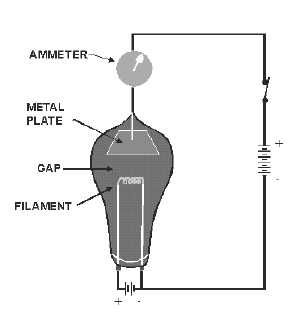
Figure 1-2.—Edison's experimental circuit.
When Edison connected the filament battery and allowed the filament to heat until it glowed, he
discovered that the ammeter in the filament-plate circuit had deflected and remained deflected. He
reasoned that an electrical current must be flowing in the circuit—EVEN ACROSS THE GAP between
the filament and plate.
Edison could not explain exactly what was happening. At that time, he probably knew less about
what makes up an electric circuit than you do now. Because it did not eliminate the soot problem, he did
little with this discovery. However, he did patent the incandescent light bulb and made it available to the
scientific community.
Let's analyze the circuit in figure 1-2. You probably already have a good idea of how the circuit
works. The heated filament causes electrons to boil from its surface. The battery in the filament-plate
circuit places a POSITIVE charge on the plate (because the plate is connected to the positive side of the
battery). The electrons (negative charge) that boil from the filament are attracted to the positively charged
plate. They continue through the ammeter, the battery, and back to the filament. You can see that electron
flow across the space between filament and plate is actually an application of a basic law you already
know—UNLIKE CHARGES ATTRACT.
Remember, Edison's bulb had a vacuum so the filament would glow without burning. Also, the space
between the filament and plate was relatively small. The electrons emitted from the filament did not have
far to go to reach the plate. Thus, the positive charge on the plate was able to attract the negative
electrons.
The key to this explanation is that the electrons were floating free of the hot filament. It would have
taken hundreds of volts, probably, to move electrons across the space if they had to be forcibly pulled
from a cold filament. Such an action would destroy the filament and the flow would cease.
The application of thermionic emission that Edison made in causing electrons to flow across the
space between the filament and the plate has become known as the EDISON EFFECT. It is fairly simple